
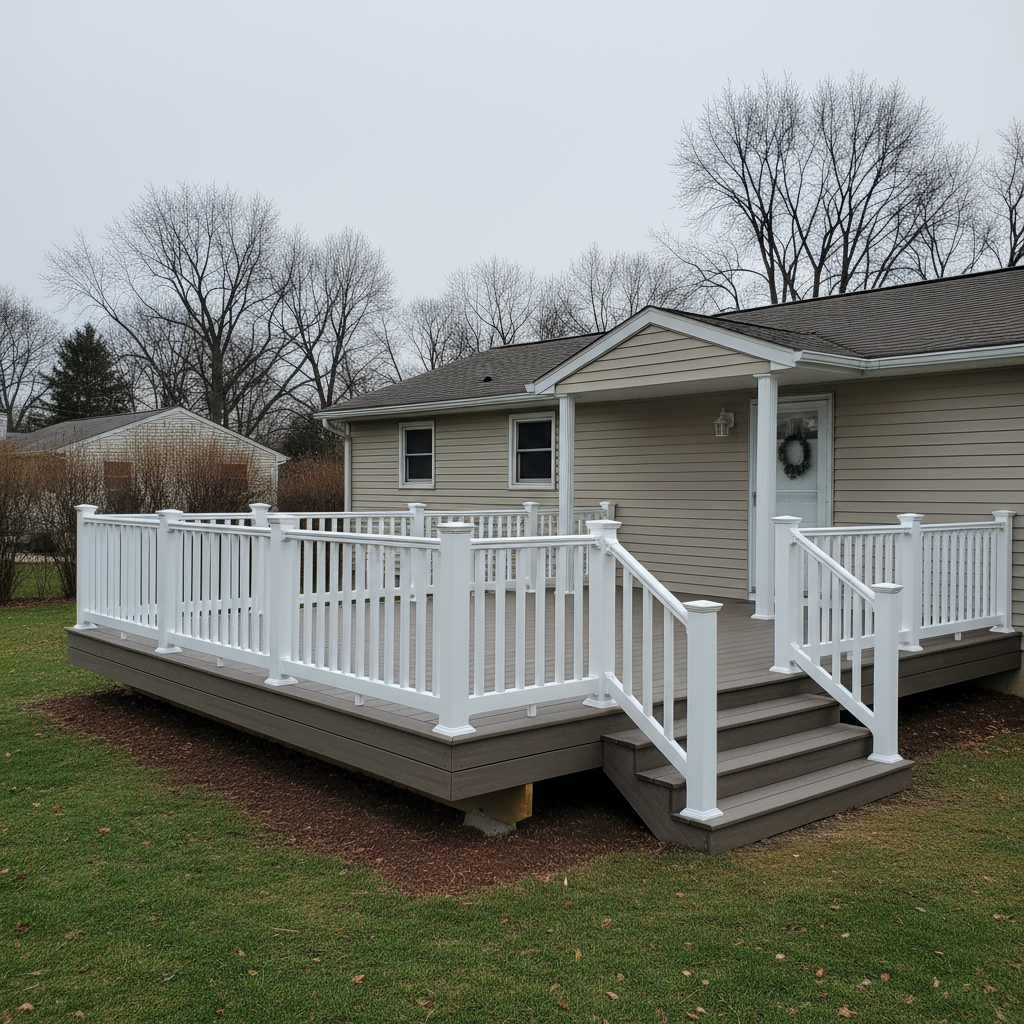
A deck is one of the few home projects where the mistakes don't show up right away. A bad footing doesn't fail in month two. It fails in year four, after three or four freeze-thaw cycles have worked on it, usually right when you've got twelve people on the deck for a graduation party. So picking the right builder matters more here than it does for, say, painting a fence.
Start with the frost line, not the price
In Broome County, footings for anything attached to the house need to go below the frost line, which around Vestal runs about 42 inches deep. That's not a guess, it's what keeps a post from heaving up out of the ground every spring when the clay-heavy soil in most of these yards thaws unevenly. Vestal sits on glacial till, a lot of it dense clay that holds water in April and locks up hard by August. A footing poured at 24 inches might hold for a year or two. Then the ground freezes, expands, and pushes it. You'll see it as a post that's suddenly an inch proud of where it used to sit, or a deck that's developed a slope toward the yard.
Ask any builder you're considering how deep they dig footings and what they pour them with. "We go to code" is a fine answer. A vague answer, or one that changes when you push back, isn't.
Permits aren't optional, and skipping them costs you later
The Town of Vestal requires a building permit for most deck construction, especially anything attached to the house or more than 30 inches off grade. That means a plot plan showing setbacks from the property line, and it usually means at least two inspections: one for the footings before you pour concrete over them, and one at framing, before the decking boards go down and hide everything. A contractor who tells you permits are a waste of time, or who offers to "keep it off the books" to save you money, is setting you up to pay for it when you sell the house. Unpermitted decks show up in home inspections, and buyers' agents know exactly what to look for. Re-permitting after the fact, with the structure already built, is a worse process than doing it up front.
If you're in an HOA-governed development, which is more common in some of the newer subdivisions off Route 26 than in the older streets near Vestal center, you'll likely need a separate architectural approval too. A builder who's worked locally will know to ask about this before drawing anything up.
What the age of your neighborhood tells you
Houses in Vestal Hills and around the older core of town were mostly built from the 1950s through the 1970s, and a lot of them have decks that were added later, sometimes decades later, sometimes by a previous owner with more enthusiasm than carpentry skill. If you're replacing one of these, expect surprises: ledger boards bolted straight into old siding with no flashing, posts set on patio blocks sitting right on the surface instead of a real footing, joists spaced 24 inches apart instead of 16. A good builder will tell you this during the estimate, not after they've torn the old structure out and found it.
Newer subdivisions have fewer surprises underground but often tighter setback margins, since lots tend to be smaller. That changes what size deck actually fits, which is worth knowing before you fall in love with a design.
Materials: pressure-treated, cedar, or composite
Pressure-treated pine is still the most common framing material and it's fine, as long as the lumber is rated for ground contact where it needs to be and fasteners are hot-dip galvanized or stainless, not whatever was cheapest. Composite decking has gotten a lot better over the last ten years and handles our humid summers without the cupping and splintering you sometimes get with cedar. It costs more up front, generally 20 to 30 percent over wood for the decking boards themselves, but it doesn't need to be restained every two or three years. If a contractor pushes you hard toward one material without asking what you actually want out of it, maintenance level, look, budget, that's worth noticing.
Staining and sealing matters more here than people expect, because our winters bring repeated freeze-thaw cycles from December through March, and a deck surface that isn't sealed will take on water, freeze, and start checking within a season or two.
Red flags worth walking away from
- No written contract, or a contract that doesn't spell out lumber grade, fastener type, footing depth, and a payment schedule.
- Asking for full payment up front. A deposit is normal. The full amount before any work starts is not.
- No proof of liability insurance. Ask to see it, not just hear about it.
- A quote that's dramatically lower than everyone else's. Decks have a real cost in concrete, lumber, and labor hours, and a number that's 40 percent under the rest usually means something's being skipped, often the part you can't see once the boards are down.
- Reluctance to pull a permit, or a vague answer about who's responsible for getting one.
Questions worth asking before you sign anything
How many inspections does the Town of Vestal require for this project, and who schedules them? How deep do you set footings, and why? What's the lead time right now, and how long does the build itself take once you start? A typical attached deck, say 300 to 400 square feet, runs anywhere from five to ten working days depending on weather, stairs, and railing complexity, not counting the time waiting on permit approval or inspection scheduling, which can add a couple of weeks on its own. If someone promises a deck that size in two days, ask how.
A builder who answers these specifically, with numbers, has done this before in this town, under this code, in this ground. That's most of what you're actually paying for. If you want to see how we handle footings, framing, and the permit process on a real project, Blackstone Deck Builders can walk you through what's involved for your lot specifically.