
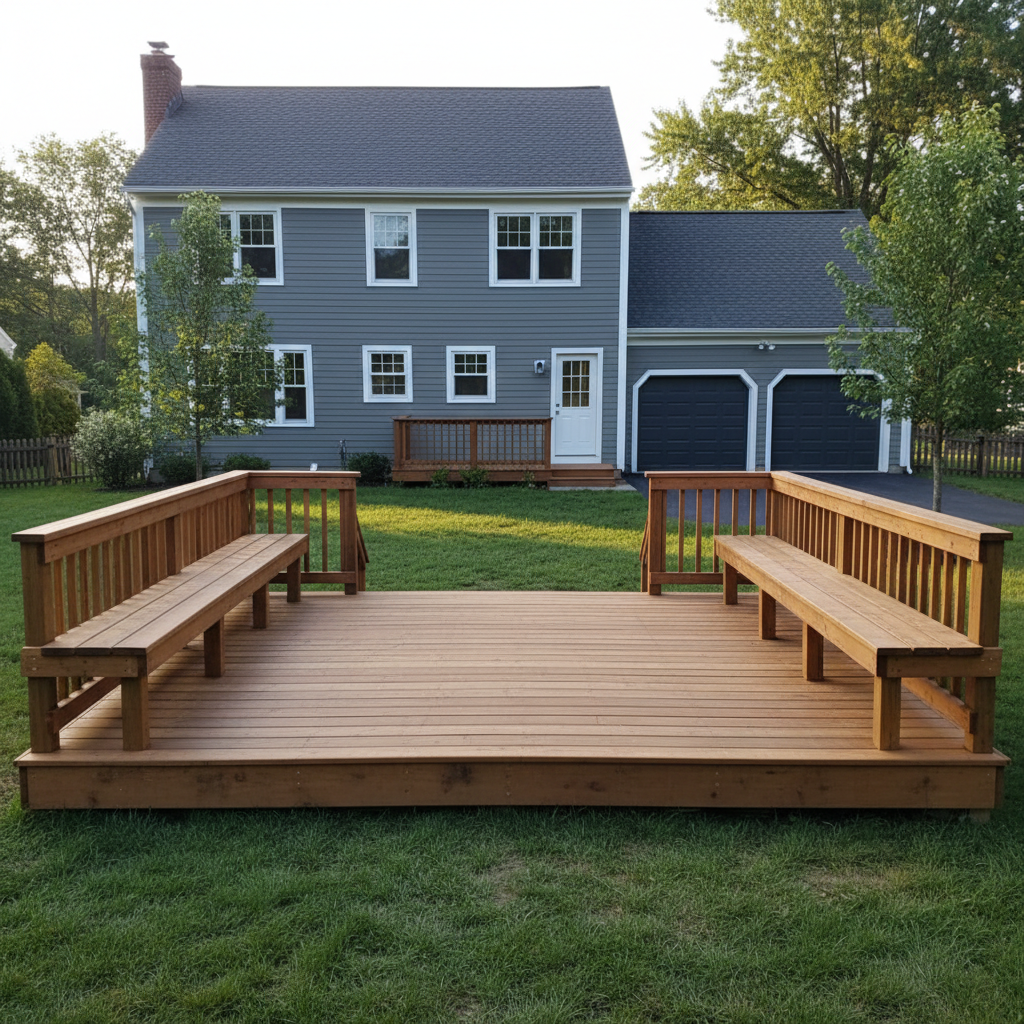
People ask us this more than almost anything else: when should I actually schedule deck work around here. The honest answer depends on what part of the job you mean, because framing, concrete, and staining each have their own calendar in the Southern Tier.
Vestal sits in a part of New York where the ground freezes deep and the swings between freezing and thawing happen over and over, not just once a winter. That's the thing that drives most of the scheduling decisions on a deck project, more than rain or heat.
Footings have to beat the frost line
Broome County code and common practice here put the frost line around 42 inches down. Any footing for a deck post needs to sit below that, or the ground will heave it up over a few winters and you'll end up with a deck that rocks or a stair stringer that's pulled away from the house. That means footing holes dug in December, when the top foot or so of clay-heavy soil is already frozen solid, are miserable and sometimes impossible without special equipment. Late fall, before the ground locks up, and spring after it thaws out, are the two windows where digging a 42-inch hole is a normal day's work instead of a fight.
Poured concrete also needs time before it takes a load. It reaches a usable strength in about a week in good conditions, full cure takes closer to 28 days, and cold slows that curing way down. Pour footings in late October when nights are dipping toward freezing and you're relying on the concrete to warm itself through a chemical reaction that cold weather fights against. We'd rather pour in September or in May than gamble on a November cold snap.
Vestal's clay soil and spring mud
A lot of yards in Vestal sit on clay-heavy till left behind by the glaciers, and clay does not drain the way sand does. In March and April, after snowmelt and before the ground firms back up, those yards hold water close to the surface. Dig a footing hole in that and you're bailing it out before you can pour. It's workable, but it's slower, and if your yard sits low or close to the Susquehanna floodplain, we build grading into the plan so water moves away from the posts instead of sitting against them all spring.
This is also why we push back on starting excavation the week after the snow melts. Give the ground two or three dry weeks first. The soil needs to firm up enough to hold a footing shape, and rushing it just means redoing the hole.
Staining and sealing want a narrow window, not a season
Stain and sealer don't care what month it is, they care about the wood's moisture content and the air temperature while it cures. New pressure-treated lumber needs to dry out for a few weeks to a couple of months before it'll take a stain properly, so a deck built in June often isn't ready to seal until August. For existing decks, the ideal is a stretch of days in the 50s to low 70s, low humidity, no rain forecast for 48 hours after application and ideally 24 before. Vestal's summer humidity in July and August works against that. A hot, muggy afternoon makes oil-based stain skin over on top before it's soaked in, which traps moisture underneath and leads to peeling the next season. Late spring and September tend to give us more of those clean dry stretches than the middle of summer does.
Composite boards move with the heat, wood moves with the humidity
If you're going composite, know that a 12 to 16 foot board can expand close to a quarter inch or more across its length between a cold morning and a hot afternoon. Installers leave gap spacing for exactly that reason, and it's part of why composite installation in peak summer heat takes more care with fastener placement than the same job in October. Pressure-treated wood moves differently. It swells when it's damp and shrinks when it dries, which is most of why boards cup or crown over a few years, especially if they were installed still wet from the mill.
How permits and inspections fit the calendar
The Town of Vestal's building department handles permits for deck construction, and most decks attached to the house or built above a certain height off grade need one, along with a footing inspection before you backfill and a final inspection that checks railing height and baluster spacing. Scheduling an inspection in late fall, when the building department is also busy with everyone trying to close out projects before winter, can add a week or two to your timeline that doesn't exist in June. If your lot backs up to a setback line or an easement, which isn't unusual on the older streets near the river, that gets checked against your survey before the permit is issued at all, and that step is easier to sort out in spring with a full season still ahead of you.
What this means for older decks versus newer ones
Vestal has a lot of housing from the 1950s through 70s, built up during the IBM years, and plenty of those original decks are long past their footing's intended life even if the boards look fine on top. A 40 or 50 year old deck often has footings that were never dug to today's frost depth standard at all. Repair or replacement work on those older decks tends to turn into footing work whether that was the plan or not, so it's worth treating that job on the same fall-or-spring schedule as new construction, not as a quick summer fix.
Newer subdivisions off Vestal Parkway and around the university have decks built more recently to current code, so repair work there is more often boards, railings, or stairs rather than structure, and that kind of work has a lot more flexibility on timing because there's no concrete curing to wait on.
If you're trying to figure out where your own project falls in all this, Blackstone Deck Builders can walk the yard with you and tell you what the soil and the season are actually going to ask of the job.